
Searching Gage County Civil Dockets
The Nebraska JUSTICE One-Time Court Case Search is the statewide entry point. It serves Gage County civil case information. Pick Gage as the county. Then enter a party name or the exact case number. The Court Type filter narrows results to County Court or District Court. Case type, year, judge, attorney, and judgment date work as extra criteria in the statewide system. Pair the county with at least one more criterion. A county-only docket search returns far too much.
The result list is only a starting point. It can surface a caption, case type, party, judge, or attorney where those fields exist. Open the case itself for the Register of Actions. That view may also carry financial information and permitted images. Read the dated events in order, and read them carefully. A filing date is not a hearing date. A motion entry is a request, not a ruling.
- Open the official JUSTICE search and select the name or case-number option.
- Enter a party name as the court record spells it, select Gage, and choose a court type when known.
- Add a year, civil subtype, judge, or attorney field only when needed to narrow a broad list.
- Open the matching caption and read the Register from filing through the newest event.
- Contact the clerk who holds the file for a certified copy, an unavailable image, or a question about the current setting.
Room 17 or Room 11 Civil Docket
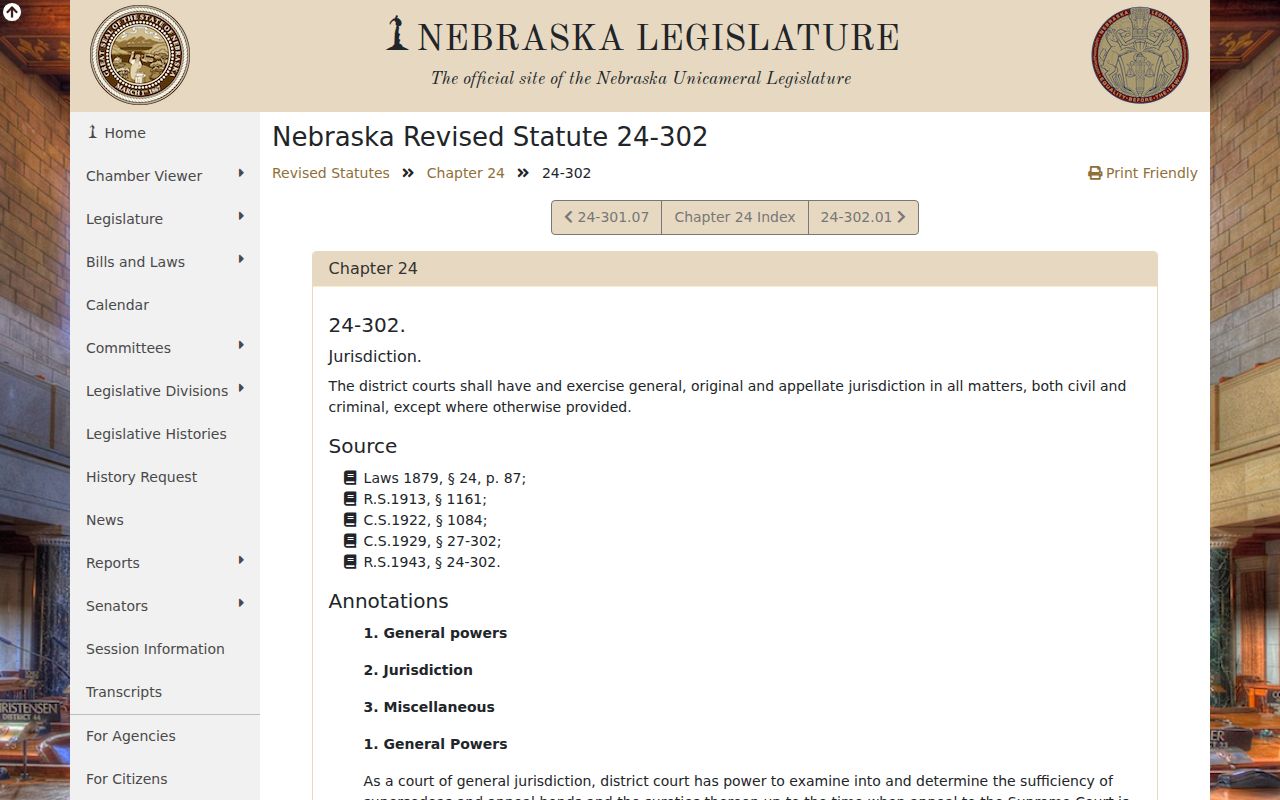
Two clerks share the Gage County courthouse. County Court civil matters go through Room 17. Room 17 covers small claims, probate, guardianship, conservatorship, adoption, and other limited civil categories. District Court records live with the Clerk of the District Court in Room 11. That court is the general-jurisdiction civil docket for the county. It holds domestic-relations filings, major civil matters, and appeals from County Court.
| Record question | First Gage court route | Why it matters |
|---|---|---|
| Small claim, probate, estate, guardian, or conservator | County Court, Room 17 | County Court has the listed exclusive or limited civil jurisdiction. |
| Domestic-relations filing | District Clerk, Room 11 | The pleading is filed with the District Clerk even if a county judge may hear it. |
| Major civil or equity dispute | District Court, Room 11 | District Court has general civil jurisdiction. |
| County Court appeal | District Clerk, Room 11 | District Court receives the appeal record. |
The Nebraska District Court page describes the general-jurisdiction role that governs Gage civil docket routing.
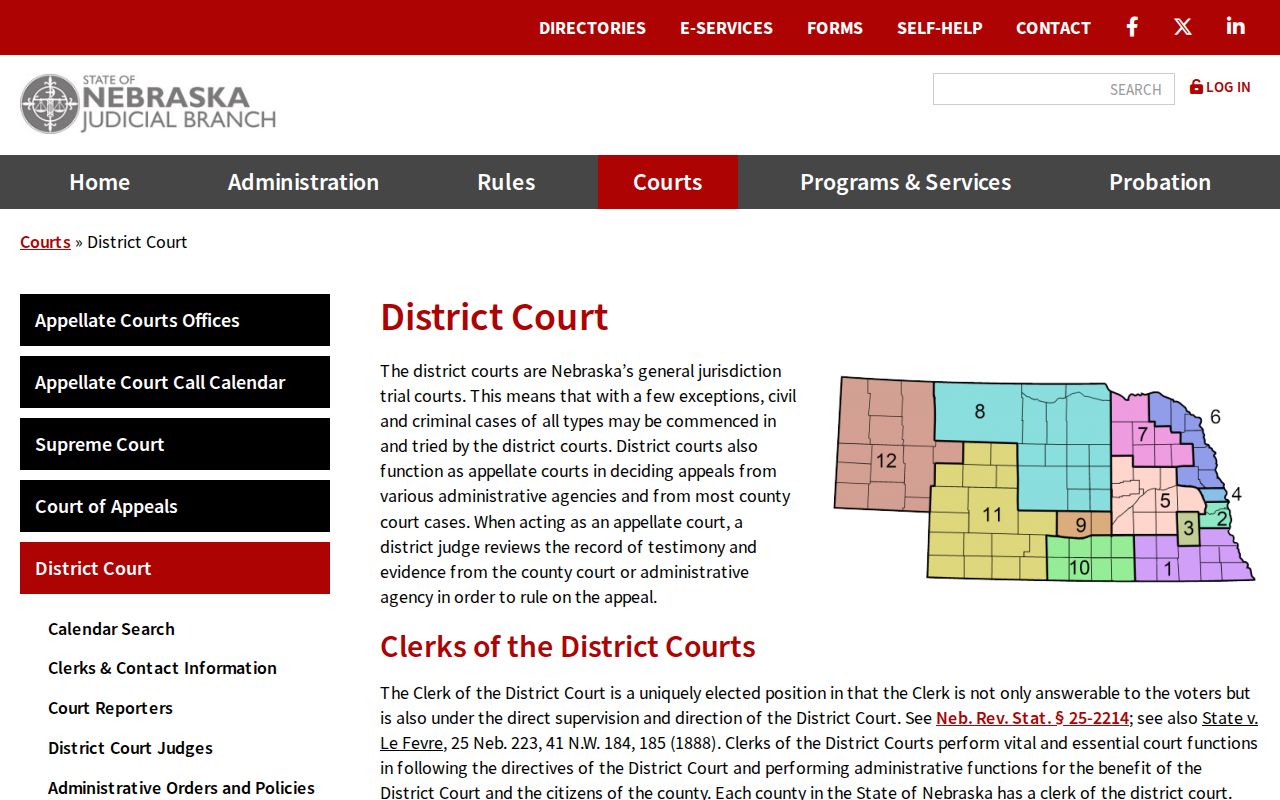
That reference helps you tell when a Gage civil docket belongs at the Room 11 counter rather than County Court.
Inside a Gage County Civil Docket
A Gage County civil case detail names the court, the case number, the caption, the judge, and the type or subtype. It also shows the filing date and the recorded status. Parties show up as plaintiff and defendant, or as petitioner and respondent in petition-based matters. From there the Register builds the chronology. It runs from complaint or petition through service, answer, motion, notice of hearing, order, judgment, appeal, and post-judgment filing. When an image link appears, it leads to the filed document behind that entry.
| Caption and parties | Shows the civil case style and the persons or entities identified in the record. |
|---|---|
| Case type | Can identify civil, small claims, domestic relations, probate, or another subtype entered in JUSTICE. |
| Service and response | Citation or summons issuance and return, answer, appearance, counterclaim, or default-related events. |
| Settings | Date, time, location, case number, caption, and the entered hearing type. |
| Judgment information | Order, costs, entered amount, payments, balance, and satisfaction events when recorded. |
| Attachments | Available document images may be linked; personal identifiers and protected material are omitted. |
A Nebraska Judicial Branch Gage-related civil call record shows the court, case, call, location, and lower-court-origin fields an official civil record carries.
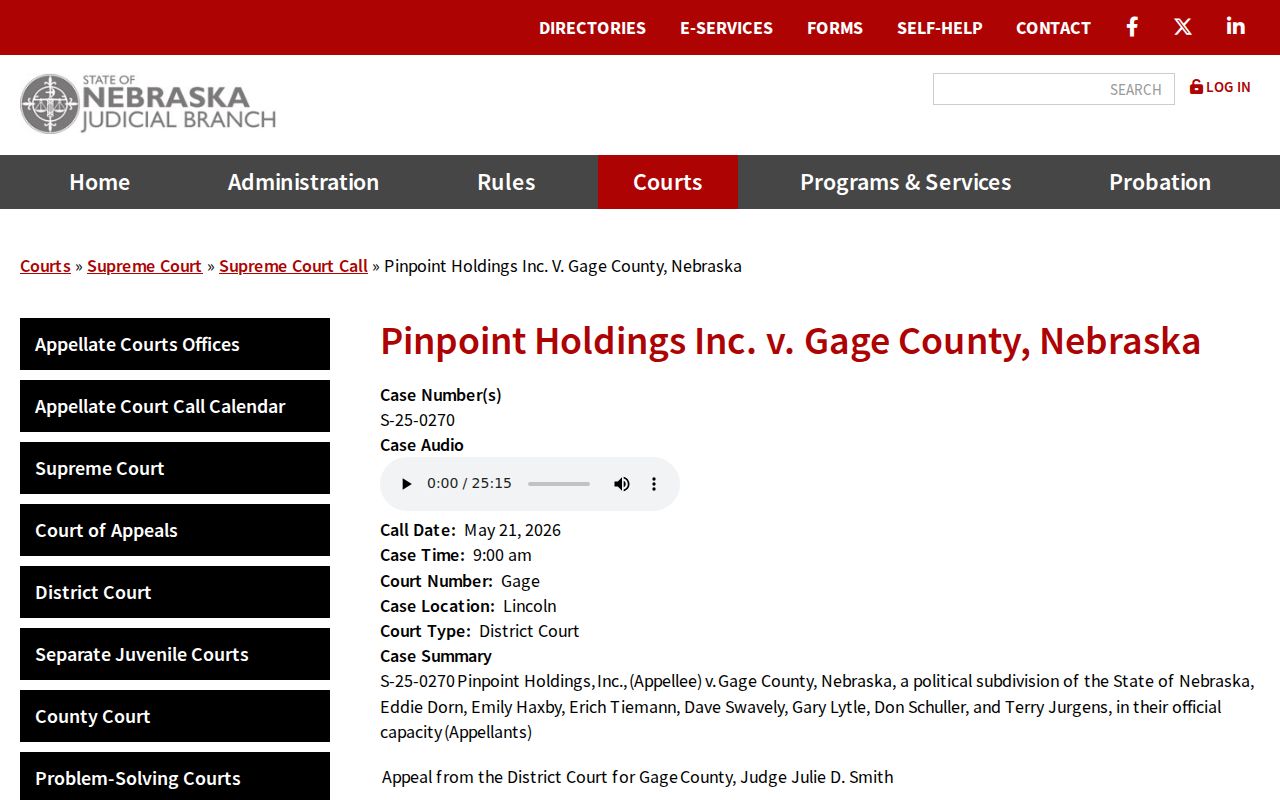
The official call entry demonstrates why a later appellate reference supplements the original Gage civil Register instead of replacing it.
Gage Civil Docket Service and Responses
Filing opens the civil timeline. It does not establish service or set a hearing. A complaint or petition starts the case, and the Register may then show a citation or summons issued, a return proving service, an answer or appearance, and finally motions or settings. Those entries let you separate a claim that was merely filed from one that reached the response or hearing stage.
No response in the docket does not mean a judgment. Default-related events and any later order have to be read together. A case of local interest may also carry a later appellate call, with its own appellate number and date. That call never substitutes for the Gage trial-court record. The Judicial Branch case-information page notes that JUSTICE case details can include Registers, case summaries, and related public information.
Note: the first date in a civil Register is often just the filing date, not the date a party was served or heard.
Civil Case Types on the Docket
Civil dockets in Gage County route by subject and court level. County Court takes small claims. It also carries its statutory probate, guardianship, conservatorship, adoption, and other limited civil duties. District Court holds major civil proceedings, domestic relations, and County Court appeals. For identifying a case, trust the title and subtype on the JUSTICE record. Do not guess based on the parties alone.
Neb. Rev. Stat. § 24-517 sets out County Court jurisdiction. Neb. Rev. Stat. § 24-302 covers District Court jurisdiction.
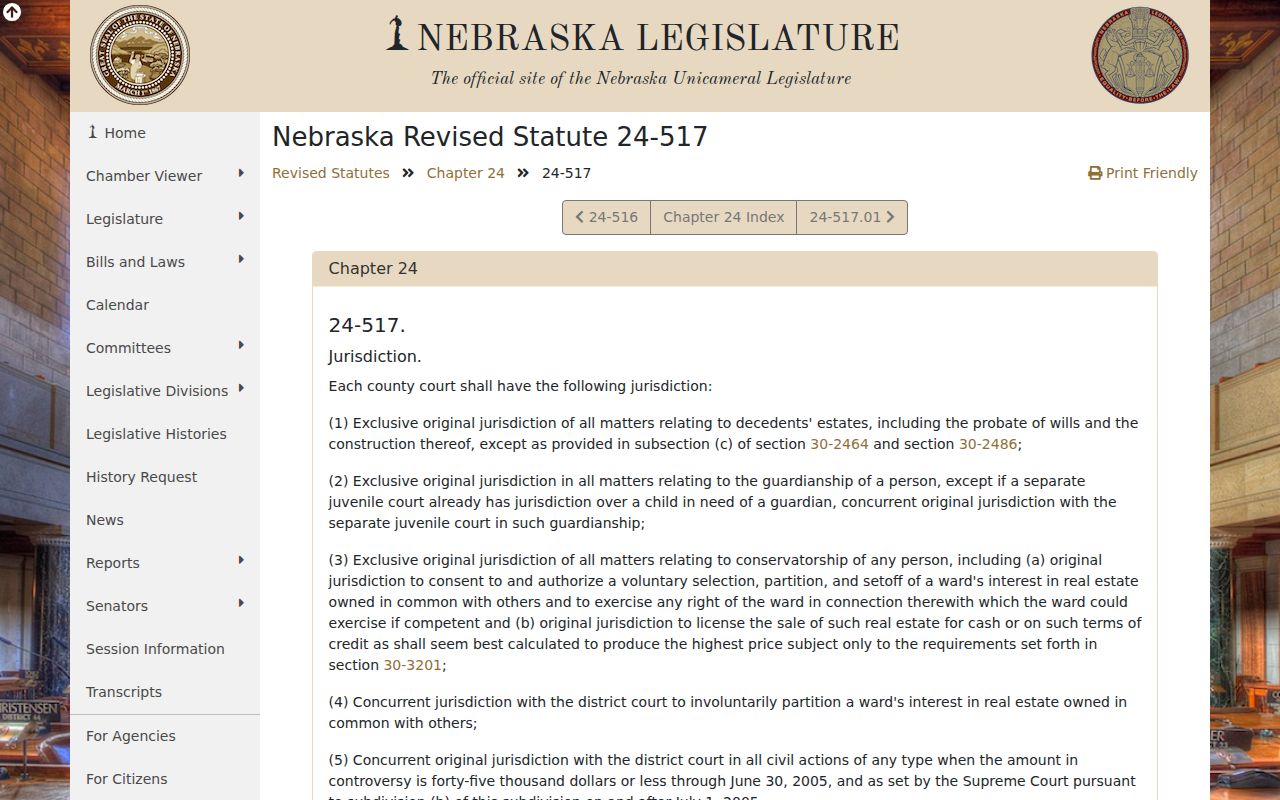
The County Court jurisdiction source is worth a quick check before requesting a civil docket from Room 17.
Gage Civil Docket Motions and Orders
A motion entry tells you one thing only. It says a party asked the court for an order. It is not a ruling. What comes next matters more, so look for a notice of hearing, an order submitted, a signed order, or a hearing result. The sequence can also reveal a status conference, trial setting, agreed judgment, dismissal, or a later appeal. Remember that a reset can leave an earlier setting visible in the Register. Track dates by the most recent related entry.
- Default judgment
- A judgment entered after a required response or appearance did not occur.
- Nonsuit
- A plaintiff’s voluntary dismissal, generally without a merits determination.
- DWOP
- Dismissed for want of prosecution, meaning the court closed an inactive case.
- Agreed judgment
- An agreement presented by the parties and adopted as an order or judgment.
- Satisfaction
- A post-judgment entry showing payment or release as filed; it does not rewrite the original judgment.
For terms and effect, read the signed order itself. A judgment amount and a current payment balance are separate parts of the case record.
Civil Docket Settings and Hearings
Look at a civil Register entry and you may find a hearing notice, a status conference, a motion hearing, or a trial date. The entry usually lists the date, time, court location, case number, and caption. Check that against the newest entry on the Register before relying on it. When a date looks unclear, turn to the statewide Multi-Court Case Calendar, which pulls up current and future settings by date or by a party's last name. Treat it as a calendar tool, though, not a full docket search.
A blank result there does not guarantee the hearing is off. For Gage County civil matters, call County Court at Room 17, 402-223-1323, or District Court at Room 11, 402-223-1332, and staff will confirm the current date, time, and place for the court record they hold.
Gage Small Claims Civil Docket
Small claims run through Gage County Court. Under the current Nebraska statute, the jurisdictional limit is $7,500 starting July 1, 2025. Interest and costs are left out of that figure. Searching a small-claims caption or case subtype in JUSTICE works. Just set Court Type to County Court first. Read the docket itself for service, response, setting, judgment, and any later satisfaction entry. Neb. Rev. Stat. § 25-2802 sets out the current small-claims amount on the Legislature's official statute page.
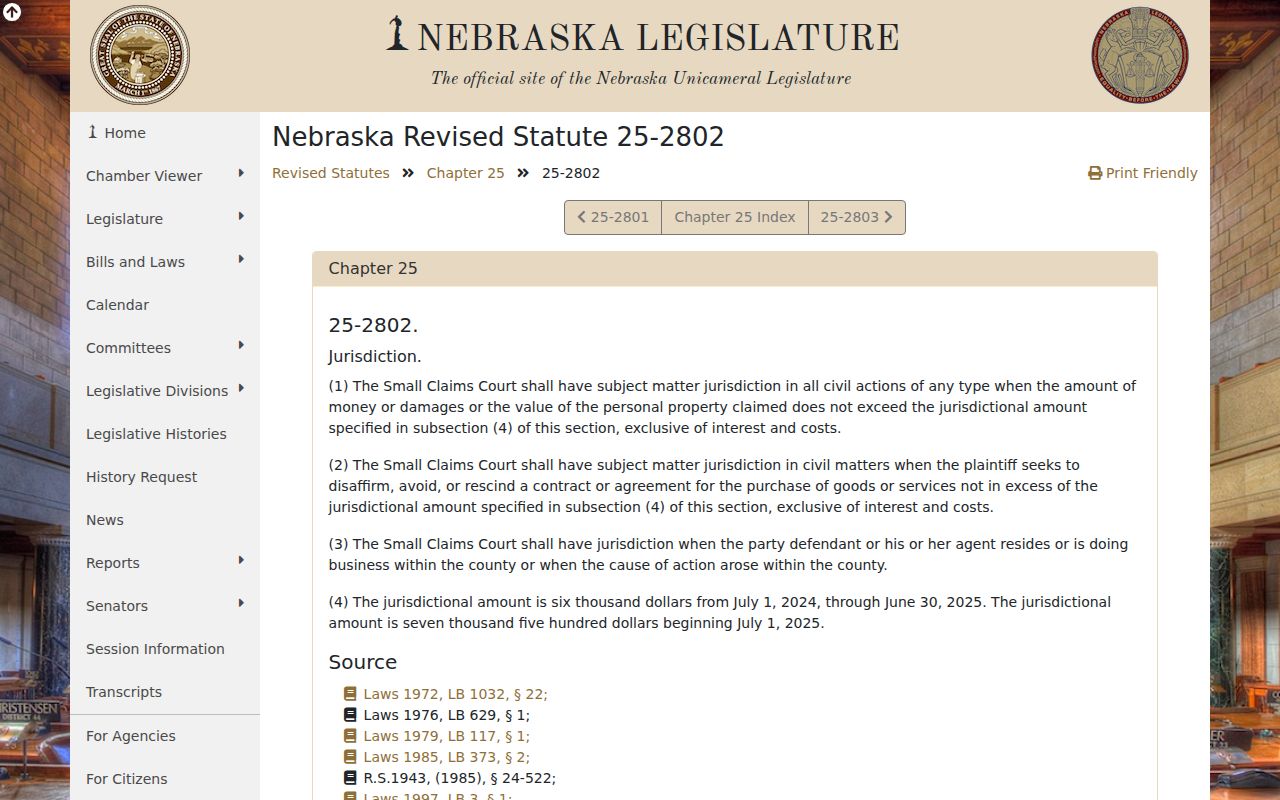
That statute page ties the Gage small-claims docket to the real statewide limit. It replaces guesswork with the current jurisdiction amount in one place.
Civil Docket Access Rules
Public electronic access opens up party indexes, case summaries, Registers of Actions, calendars, and judgment or order summaries. Images appear where they exist. Some material stays closed. Family or juvenile attachments and personal identifiers are withheld from ordinary public access. A blank result can also mean old paper records, the wrong court type, or a case not yet added online. Neb. Ct. R. § 1-805 governs what electronic court information the public can reach. Under Neb. Ct. R. § 2-215, filings in the public view stay subject to any restriction imposed by law, rule, or court order. Paper records never converted to electronic form may require a visit in person.
Gage Civil Docket Copies and Images
Document images are a different tier. JUSTICE shows them only through subscriber case detail. The one-time search gives case information with no images attached. And remember that a certified copy must come from the clerk who owns the case. Never rely on a printout at home. State form CC 3:30 sets the baseline: $0.25 per page and $1 per seal. Gage may add certification, mailing, search, or deposit charges. No flat local certified-docket fee applies, so ask before requesting work.
Civil requests split by court. County Court civil files go to Room 17, or call 402-223-1323. District Court civil and domestic-relations files sit with Room 11, or 402-223-1332. Old files may live on paper, microfilm, or in an archive. Ask the holder what it has. A written request should name the case, the document, the date, and the certification you want. The County Clerk sometimes forwards a request when the right office is unclear. It is not the usual court-docket keeper, though.
Neb. Rev. Stat. § 25-2740 spells out the District Clerk filing route for domestic-relations pleadings.
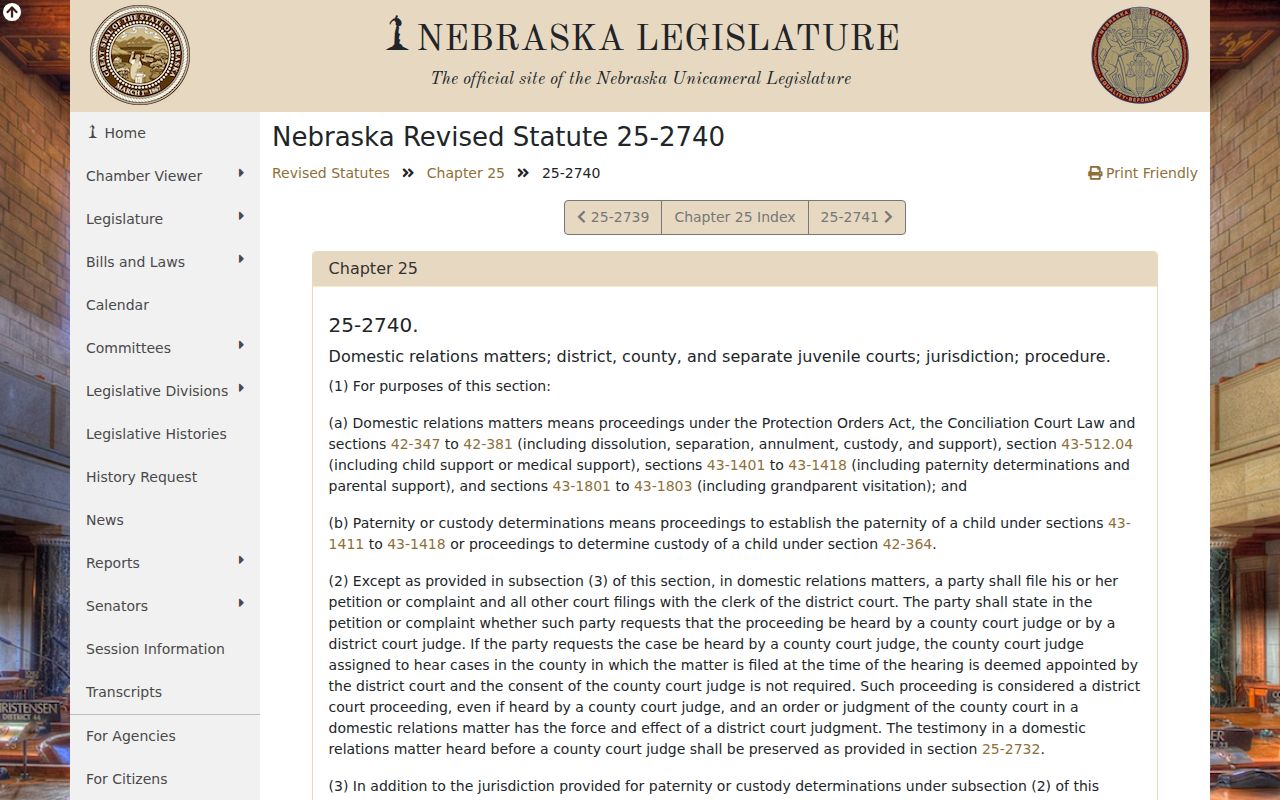
That filing statute backs up a key Gage civil docket distinction. It separates the county judge's role from the clerk who physically holds the District Court file. The District Court jurisdiction statute is likewise the official source for a Gage civil docket's general-jurisdiction route.
Going to the court that actually holds the record keeps a civil docket request on target. That office is the one able to produce a copy or certify it.